How To Clean Gun Cleaning Mops (4 Easy Steps)
To clean gun cleaning mops, rinse them with rubbing alcohol to remove residue or debris, then let them air dry completely before future use. Bore mops, typically made of 100% cotton, can be washed and reused, but it’s advisable to check the manufacturer’s instructions. Periodic inspection for wear and damage is recommended, and replacing frayed or worn-out mops ensures effective gun bore cleaning and prolongs their lifespan.
A gun cleaning mop is a thick mop of cotton, and it comes in the same diameter as the gun bore.
You may apply to the gun cleaning mop the gun cleaner and push it front and back.
It will soak the area and move easily. During this course of action, the mops also wipe the barrels and lose fouling odor.
Mostly the bore mops are of high quality and come in good construction quality.

They are useful for bore lubrication and quick cleaning. Mops are excellent while using lubrication oil in the bore.
It is because it creates foaming action, and assists in the process of lubrication.
Applying gun cleaner in a liberal amount is possible only by using a bore mop so that it reaches every inch of the gun bore.
As gun cleaning mops are used extensively to clean the gun, there is a need to pay attention to the gun cleaning mops.
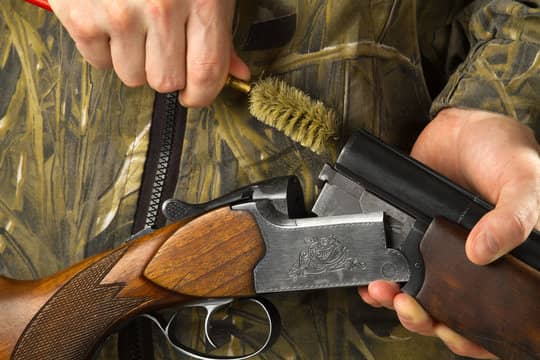
It would help if you used a dishwashing liquid to rub in full strength to the cleaning mop and rinse in hot water.
Importantly, allow the mop to dry completely so that it is of use again.
A gun-cleaning mop is a gun-cleaning rod. Your firearms can get easily damaged during the cleaning process.
If you buy the wrong cleaning equipment for the gun, it will result in damage.
The rods used for cleaning are the piece of equipment you should purchase and handle with care with cleaning the gun.
Purchasing a gun cleaning mop implies:
- You buy a brush with softer metal than gunmetal.
- Buy the best brush in bronze for cleaning guns as cleaning rods.
- For high quality, you may consider a carbon fiber rod.
Buying a bronze or a carbon fiber rod as a cleaning mop is useful, yet it must get any brush that does not Knick the gunmetal inside.
Quick Summary
| Step | Action |
|---|---|
| 1 | Remove mop from rod and rinse under hot water to flush out residue and debris. |
| 2 | Soak in hot soapy water (dish soap) for 10-15 minutes to break down oils and grime. |
| 3 | Scrub gently with a soft brush, then rinse thoroughly with clean water. |
| 4 | Squeeze out excess water and air dry completely before reuse (avoid heat sources). |
How to clean a gun using cleaning mops?
Keeping your gun cleaning mops spotless is a total game-changer—dirty ones just spread grime around your firearm instead of wiping it away, leading to sticky actions, wonky reliability, or worse, a misfire when you least expect it. Don’t let that happen, yeah?
Pull the trigger, and that little chamber lights up like fireworks, blasting the bullet out while dumping powder residue and gunk right into the barrel. No wonder your cleaning mop ends up a mess after swabbing it out—it’s picking up all that nasty buildup.
Look, nobody wants a gunked-up bore causing jams or worse when you’re out shooting. That’s why you gotta scrub those cleaning mops after every session—keeps everything running smooth, no drama.
Hit the range for some target practice? Fire off those rounds and have a blast—but scrub your gun clean right after, every single time. Those cotton mops you use to swab out the gunk? They soak up powder residue like sponges, so give ’em a proper wash or they’ll turn into nasty clumps next outing.
Always clean your gun mops in a spot with plenty of fresh air flowing—those solvents kick up some nasty fumes that’ll have you seeing stars if you’re stuck indoors.
Those gun lubes and solvents soaked into your mops? Man, they reek like old gym socks, and the fumes’ll have your head spinning if you’re not careful. Crack a window or head outside—good airflow keeps you from turning green while scrubbing ’em clean.
If you’re keeping your gun cleaning mops spotless, snag a solid cleaning kit first—they get grimy quick from all that solvent and residue. Head to the sporting goods store for a pre-packaged one; it’s way easier than piecing it together yourself.
If it’s still put together, just yank it apart—no biggie. Grab some basic cleaning supplies while you’re at it, or this’ll turn into a sloppy mess real quick.
What You Need
- A bore brush
- Gun or lubricant oil
- Cleaning solvent
- Flashlight
- Cleaning rod
- Cotton swabs
- Patches and a patch holder
- A nylon cleaning brush
- Microfiber polishing cloths
Alright, supplies gathered? Awesome—time to break down that grimy mop. Just twist off the cotton head from the rod (or pull it free if it’s a snap-fit), and you’re set for the real cleaning fun. No fuss, gets the job done quick.
Look, before you tackle cleaning those gun mops, strip down your pistol first. It’s not a total must-do for the mop scrub, but it’ll save your bacon come repair time—you know how grime hides in the nooks.
Go ahead and take your gun cleaning mop apart if the manufacturer’s guide says so—some of these bad boys are built to come undone for that deep-down scrub. Skips the hassle of leftover residue later.

First things first, grab the manual for those gun cleaning mops and skim it for any specific tips—trust your gear’s instructions, ya know? Get the mops unloaded and laid out on a sturdy workbench, then you’re good to kick off the real cleaning fun.
Use the patches and cleaning rod to clean the barrel
First up, dunk your grimy mop in a bucket of gun solvent—let it sit for a few minutes to loosen all that powder residue and gunk. Start from the skinny end that pushes into the barrel; trust your gut, it soaks deeper that way without making a mess.
Grab a patch holder or your cleaning rod—either works great for this. Just double-check that your cotton patches are sized right for your gun, or you’ll end up with a messy snag that nobody wants.

If you can’t stomach starting with that gunked-up working end first—you know, the real mess—just dunk the mop in hot soapy water for a few minutes to loosen the powder and lead crud. Makes the whole job way less of a nightmare.
This keeps your cleaning rod from slamming into the muzzle crown and potentially screwing up your gun’s accuracy—total buzzkill on the range.
Grab your gun solvent and give that nasty mop a good soak—really work it in there to break down the powder residue and lead gunk. Let it sit for 30 minutes (grab a beer while you wait), then rinse it thoroughly under hot water till it runs clear. Boom, good as new.
Don’t yank the mop back, seriously—you’ll just smear every bit of crud you scraped off right back inside like some nasty boomerang. Keep pushing forward, new patch ready to go.
Hey, kicking off the mop-cleaning process right is crucial—rush this first step and you’ll end up with gunk that just won’t budge later. Take a breath and do it properly.
Interchange the patches and bore brush
Grab that crusty mop off the jag and give it a thorough eyeball—flip it around, poke into every cotton strand for leftover powder residue or frayed bits. You don’t wanna jam gunk back into your rifle bore on the next run, right? Catch it now or regret it later.
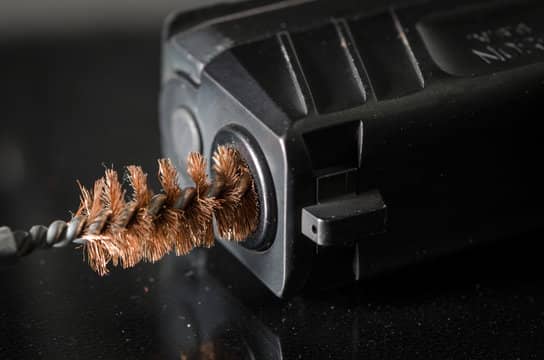
Next, swap out the patch holder for your bore brush—it’s a game-changer here. Ram it back and forth through the mop’s full length 3-4 times, really scrubbing to shake loose all that stubborn gunk. Trust me, you’ll see the junk tumble out, and your mop will thank you later.
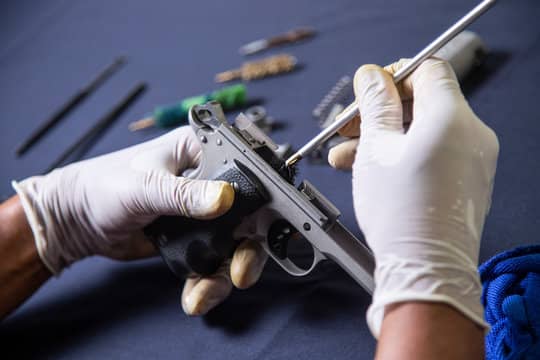
Reattach the mop to the rod—nice and snug, no cross-threading like my rookie mistake. Soak up some cotton patches with solvent and shove ’em through the bore to flush out every last bit of gunk.
You can also just snag those nasty bits as they pop out the front—way less hassle than dealing with a gunky mess later, you know?
Keep at it—repeat the steps till that mop comes out spotless and fresh. Just yank the patch right outta the inside as you go; no biggie if it takes a couple rounds.
Push a dry patch through a few times and eyeball it real close for any leftover gunk. That stuff loves to hide, so don’t rush it—better to catch it now than deal with a fouled barrel later.
Barrel lubrication
Screw that cotton mop onto your cleaning rod, then drip a couple drops of gun conditioner or lube right onto the fibers. It’ll stay supple and ready for the next range day, instead of turning into a crunchy mess that snags on everything.
Just run that oiled-up mop through the bore one last time—it’ll leave a nice, thin coat of gun oil inside to protect everything without turning it into a slip-n-slide.
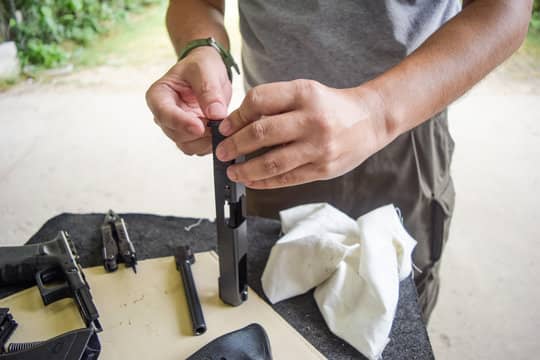
Use solvent to lubricate and clean
Once you’ve scrubbed the gunk off your gun cleaning mop, give it a good wipe-down with a clean cloth to get it bone-dry. That’s your cue to soak it in solvent—trust the process, or you’ll end up with a soggy mess that attracts more crud next time.
Give any moving bits on your cleaning rod—like threads or joints—a super light lube swipe. Keeps everything gliding smooth without gunking up your freshly cleaned mop.
Those coatings on the metal jags and rods keep rust from sneaking in, so just wipe on a super light layer after cleaning. Goop it up too much, and watch it turn into a dirt magnet—trusty old lint trap in no time.
Tips
- For benefit, use a precise brush on specific calibers to ascertain full bore coverage.
- Maximize absorbency; it decreases the overall cleaning time.
Once your gun cleaning mop is wiped down and dry, grab a soft lint-free cloth and dab on a touch of silicone lubricant. Keeps the thing supple and ready to swab that barrel without any hassle—trusty sidekick status restored!
This step blasts away any leftover gunk and leaves your mop gleaming like new—total game-changer for keeping it ready to roll.
No special rag for scrubbing your gun mops? Raid the laundry hamper for some old socks or a worn-out t-shirt—they soak up the grime like champs and save you a trip to the store.
Frequently Asked Questions
How do I remove stubborn copper or lead residue from gun cleaning mops?
For stubborn residues, soak mops in a 50/50 mix of warm water and ammonia-based cleaner like Hoppe’s No. 9 for 30 minutes, then agitate by hand. Rinse thoroughly with hot water. Avoid bleach, as it degrades cotton fibers. Repeat if needed, and always wear gloves.
Can I machine wash my cotton gun cleaning mops?
Yes, machine washing on a gentle cycle with hot water and mild detergent like Dawn dish soap works well. Use a mesh laundry bag to prevent tangling. Rinse twice to remove all soap residue, which can attract dirt. Do not use fabric softener or dryer sheets, as they leave residues that contaminate your firearm.
How do I properly dry gun cleaning mops to prevent mildew?
Air dry mops completely by hanging them individually in a well-ventilated area away from direct sunlight, which can fade colors or weaken fibers. This takes 24-48 hours. Avoid stacking wet mops. Once dry, they should smell fresh; if musty, rewash with a splash of white vinegar in the rinse cycle.
Can I reuse gun cleaning mops after cleaning them, and how many times?
Yes, quality cotton or nylon mops can be reused 5-10 times if cleaned properly. Inspect for fraying, tears, or retained grit after each use. Discard if damaged, as debris can scratch your bore. Synthetic mops last longer than cotton for solvent-heavy use.
Will dish soap damage my gun cleaning mops?
No, mild dish soaps like Dawn are ideal and recommended by manufacturers like Otis or BoreTech. They break down oils and solvents without harming fibers. Avoid antibacterial soaps or those with moisturizers, which can leave gummy residues. Always rinse thoroughly.
My cleaned mops still smell like gun solvent—what should I do?
Resoak in hot water with baking soda (1/4 cup per gallon) for 1 hour to neutralize odors, then wash with vinegar (1 cup per load) in the rinse cycle. Air dry outdoors if possible. Persistent smells indicate incomplete rinsing—repeat the process until odor-free to avoid contaminating future cleanings.
What’s the difference in cleaning cotton vs. nylon gun cleaning mops?
Cotton mops absorb more solvent and need hotter water (140°F+) for thorough cleaning to prevent mildew. Nylon mops are more durable and solvent-resistant; clean with cooler water and less agitation to avoid melting. Both benefit from the same 4-step process: soak, wash, rinse, dry—but check manufacturer specs.